Top 10 Hottest Marathon Editions Ever Run
MarathonGuide Staff
Oct 20, 2025
COPY LINK
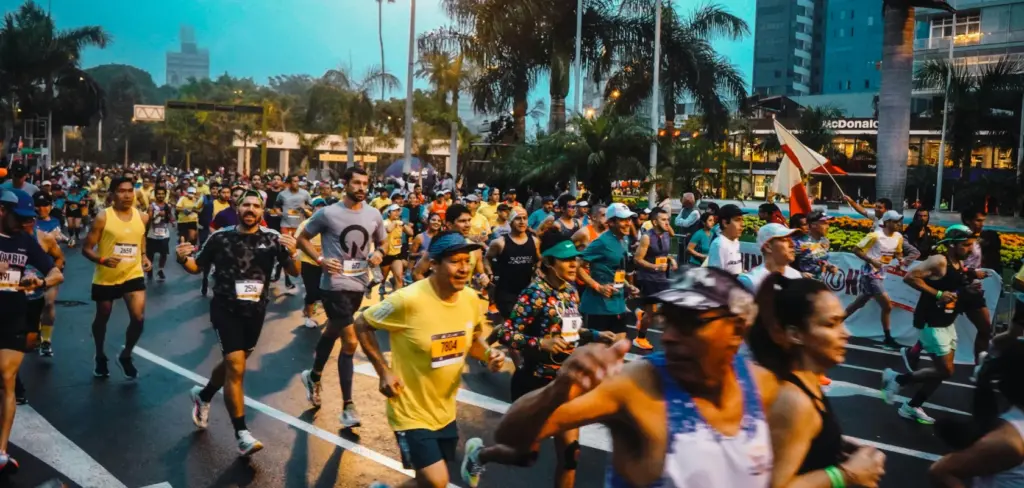
Marathons test human endurance. Over the years, many races have battled the heat, but a few stand out for record-breaking temperatures and near-mythical race-day conditions.
This list captures the hottest marathon editions ever run, based on actual recorded high temperatures on race day — not climate averages or worst-case forecasts.
How We Built This List
To ensure accuracy and consistency:
- Only traditional, single-day, 42.195 km marathons were included.
- Ultramarathons and multi-day events (e.g. Marathon des Sables, Badwater 135) were excluded.
- Each edition was verified by at least two credible sources, including official race records, weather databases (e.g. NOAA), and coverage from outlets like Runner’s World, Wikipedia, Bloomberg, WSJ, and CitiusMag.
- Races were ranked by actual race-day high temperature, not just start temps or “feels like” estimates.
Hottest Marathon Editions of All Time
🥇 1. Boston Marathon, 1976
Temp: ~100 °F (38 °C)
Known as the “Run for the Hoses,” this infamous edition saw spectators spraying runners from garden hoses along the course. Water was scarce, and the heat was punishing. It remains the most talked-about heat event in Boston’s long history.
🥈 2. Boston Marathon, 1905
Temp: ~100 °F (38 °C)
Historical accounts document oppressive heat and dangerous conditions. While precise measurement standards were looser at the time, it’s widely cited as Boston’s original scorcher.
🥉 3. Chicago Marathon, 2007
Temp: 88 °F (31 °C)
This was the year the race was shut down mid-run for safety concerns. Over 300 runners were hospitalized. The mayor even called for a review of how races handle extreme conditions.
4. Boston Marathon, 2012
Temp: 87 °F (31 °C)
The BAA offered registered runners a rare deferral option. Even many elites pulled out. Runners described the heat as relentless, and medical tents filled up quickly.
5. Boston Marathon, 2004
Temp: ~85 °F (29 °C)
With high humidity and relentless sun, this race turned into a war of attrition. Finish times across the board slowed down, and runners described the day as “brutal.”
6. Boston Marathon, 1987
Temp: ~84 °F (29 °C)
One of the hottest editions of the 1980s, it’s often referenced when comparing challenging race years. Finish rates dipped significantly, and even experienced runners struggled.
7. New York City Marathon, 1979
Temp: 80 °F (27 °C)
The hottest edition in NYC Marathon history. With a noon start time back then, runners faced hours in rising heat on concrete — a combination that led to one of the toughest NYC experiences ever recorded.
8. New York City Marathon, 2022
Temp: 75 °F (24 °C)
Unseasonably warm for early November, this race was one of the most humid NYC marathons ever. Medical tents were overwhelmed, and many runners posted personal-worst times.
9. London Marathon, 2018
Temp: 75.3 °F (24.1 °C)
The hottest London Marathon on record. Organizers added cooling showers and extra hydration points, but the heat took a toll. Many runners reported dehydration and heat exhaustion.
10. London Marathon, 1996
Temp: 72.8 °F (22.7 °C)
Previously the hottest London Marathon until 2018 took the title. This race marked the first time UK media widely focused on the heat’s impact on performance and safety.
What Happens in the Heat?
- Dehydration risk increases sharply above 70 °F (21 °C)
- Finish times slow by 1–2% per every 5 °F above 60 °F (15 °C)
- Races often see more medical incidents, especially among first-time marathoners
Conclusion
These races aren’t just legendary — they’re scorched into marathon history. Runners who finished them didn’t just conquer 26.2 miles; they beat the heat, too.
COPY LINK
You are free to use this material for non-commercial purposes. This means you can read it, share it with others, and use it in your own personal projects. For more information on the rules for using this material, please read the following documents:
Creative Commons LicenseAll rights reserved. Copyright © 2026 Marathon Guide